Level 1 ABA Training Library
You could be the first person to provide your opinion.

Get a month of recorded introductory ABA teaching on prompting, classroom participation and assessment. Seven recordings are currently offered; Pairing is being revised. Use the complete list below to explore the teaching and learner feedback, and compare this library with the separate Level 1 course.
Current recording list: Seven recordings are offered below. The historical eight-module list also contains Pairing. Pairing is being revised and is not part of what this library offers today.
Purchase and access
$39 for one month of access, paid once with no recurring renewal. Start the 7-day free trial.
This is introductory recorded teaching. It does not provide an individualized assessment or intervention plan. Examples, devices and cited research reflect the recordings’ original context.
Seven recordings offered now
Choose the topic order that fits your study needs.
ABA Overview
Michele LaMarche introduces ABA through everyday examples, observable behavior definitions, antecedents and consequences, reinforcement, prompting and behavior chains. The recording walks through collecting data before and after a change and examining what the data show.
Methods of Teaching Overview
Michele LaMarche compares natural environment teaching, mix and vary, teaching across verbal operants, discrete trial training and behavior chains. Examples examine prerequisite skills, response effort, practice, breaks and reinforcement, followed by forward chaining, backward chaining and total task presentation.
Errorless Teaching and Prompting
Michele LaMarche explains vocal, visual, physical, model, gestural, looking and positional prompts. She discusses consistent prompt levels across a team, systematic fading, prompt dependency and error correction, with demonstrations introduced in the recording.
Active Student Responding: Increasing Learner's Motivation and Self-Monitoring
Michele LaMarche and Miranda Schehr examine choral responding, response cards, guided notes, computer-assisted instruction and peer tutoring. Classroom examples explore observing participation and giving feedback. They discuss privacy when answers are visible to others and limits of competitive approaches.
Strategies to Increase Beginner Classroom Participation Skills: Teaching Methods in Application
Michele LaMarche compares eight classroom teaching approaches: discrete trial training, natural environment training, mix and vary, verbal behavior programming, pivotal response training, fluency-based instruction, direct instruction and peer-mediated intervention. She discusses motivation, data, generalization and the implementer’s training when selecting a method.
Intro to Strategies to Increase Beginner Classroom Participation Skills
Michele LaMarche introduces assessment of skills, communication, motivation, and classroom and task conditions before examining reinforcement programs, visual supports and self-management. Recorded classroom examples compare individual and group approaches, including cautions about everyone losing a reward when one learner struggles.
Strategies to Increase Beginner Classroom Participation Skills: Decreasing Problem Behavior with an FBA Part 1: How to Begin
Christine Austin, as credited in the recording, walks through defining an observable target, interviewing people who know the learner, collecting ABC observations and comparing hypotheses about behavior. The recording describes prerequisites for qualified clinical functional analysis. Detailed intervention instruction is deferred to Part 2.
Pairing: Pairing is being revised and is not part of what this library offers today.
Quizzes and certificates
There is no final exam and no course certificate. Each session has its own quiz; when you pass it, that session’s certificate is emailed to you.
Recorded teaching and materials
Recorded presenters: Michele LaMarche, Miranda Schehr, Christine Austin. Christine Austin is the name credited in the recording. The linked profiles contain historical biographies.
The video sessions are not downloadable; the slide decks are.
- And with our SWAP feature, you can change out any topic you may have already taken for another from our extensive list. You never pay for a repeat you cannot use.
For cancellations and refunds, read the refund policy.
Session evaluations
Source: Special Learning course evaluations, rating snapshot October 13, 2026, at 2:57 p.m. Central. Counts use the latest rating answer per customer account and recording, including partial answers. Repeat submissions are not added again. Means use complete six-item forms. These are evaluations of the named recordings; a collection-wide mean is not calculated.
| Recording | Mean / 5 | Rating answers | Complete six-item forms |
|---|---|---|---|
| ABA Overview | N/A | 0 | 0 |
| Methods of Teaching Overview | N/A | 0 | 0 |
| Errorless Teaching and Prompting | 4.27 | 121 | 10 |
| Active Student Responding: Increasing Learner's Motivation and Self-Monitoring | 4.24 | 254 | 24 |
| Strategies to Increase Beginner Classroom Participation Skills: Teaching Methods in Application | 4.15 | 247 | 31 |
| Intro to Strategies to Increase Beginner Classroom Participation Skills | 4.20 | 327 | 43 |
| Strategies to Increase Beginner Classroom Participation Skills: Decreasing Problem Behavior with an FBA Part 1: How to Begin | 4.29 | 138 | 13 |
N/A means this snapshot contains no calculable mean for ABA Overview or Methods of Teaching Overview.
In learners’ words
Anonymous 2023 answers to “How can we make this training better?”, from the October 11, 2026 comment snapshot. These responses concern the named recordings and do not establish outcomes from buying this library.
this training was very informative
Training improvement response, 2023; Intro to Strategies to Increase Beginner Classroom Participation Skills
I think that it was great training. I really appreciated the video examples, exemplary materials and practical examples.
Training improvement response, 2023; Active Student Responding: Increasing Learner's Motivation and Self-Monitoring
Use simple language, do not overcomplicate.
Training improvement response, 2023; Strategies to Increase Beginner Classroom Participation Skills: Teaching Methods in Application
Related learning
Meet the Presenters
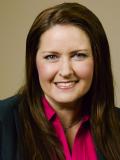
Michele LaMarche is the co-founder of Special Learning, Inc. She is also the founder and Executive Director of Step By Step Academy (SBSA), a centre-based non-profit autism treatment centre in Columbus, Ohio. Ms. LaMarche has worked in the field of Applied Behavior Analysis for more than fifteen years, and she develops the ABA curricula used in SBSA's programs.
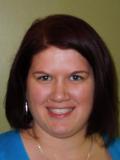
Miranda Schehr is the Clinic Transition Director of Step by Step Academy. As a clinic transition director she directs the treatment plans of multiple clients through management, training and supervision of clinical staff. Before her involvement with SBSA she worked as an Intervention Specialist in Applied Behavioral Services, where she was responsible in the implementation of treatment of multiple clients and their families through teaching and training in the classroom and home environments.
She earned her Bachelor of Science in Mild-Moderate Special Education at Xavier University, Cincinnati, OH, completed a graduate coursework in Behavior Analysis in the University of North Texas, Denton TX; and she is anticipating the completion of her Masters of Education in Cognitive and Behavioral Disabilities in August 2012.

Clinic Director at Step By Step Academy, a position she has held since 2009, where she previously served as Training and Behavior Plan Supervisor,Outreach and Training Coordinator, Program Supervisor/Outreach Support Technician and Behavior Technician.
Christine regularly publishes and presents at professional conferences on the topic of autism and behavioral support. Her areas of expertise include ABA, training, individual education plans (IEPs), treatment planning and behavior modification and behavior management. She has a BA in Psychology and minor in Sociology from Ohio State University. Now a Board Certified Behavior Analyst (BCBA), Christine trained in Applied Behavior Analysis with the University of North Texas and is certified in Crisis Prevention.
No reviews yet!
For adding a review for this product you need to purchase current product and be authorized.