
PA IBHS BHT Annual Training: 17 of the 20 Hours
You could be the first person to provide your opinion.

PA BHT annual training: nine recorded sessions
This nine-recording library brings together classroom participation, functional communication, social skills and behavior-support teaching, with sessions credited to Michele LaMarche, Lynn M. Dudek and other recorded presenters. It documents 17 clock hours toward a training plan; it does not satisfy the full annual 20-hour BHT requirement or award BACB CEUs.
Important — please read before purchasing. This course does NOT by itself satisfy the 20-hour annual BHT training requirement of 55 Pa. Code § 5240.73(e), which requires at least 20 hours. Current session certificates document 17 clock hours. To meet the 20-hour annual floor it must be combined with additional Department-approved training.
For BHTs and the teams that supervise their training, the choice is which recorded topics fit the person's role and agency training plan. Several sessions are older teaching; they are not updated clinical guidelines. Confirm acceptance with your agency before buying.
Purchase and access
$99 for 12 months of access, paid once with no recurring renewal. Start the 7-day free trial. The trial link opens the account start screen.
Use the included AI Study Companion for this library with a Google account. It is a study aid for the training material.
The nine recordings
Presenter names below are credits for the recorded teaching. They do not assert that a credential displayed in an older recording is current.
ADHD Management: Behavioral Strategies Across Settings
The June 2019 panel considers behavioral support across home and school: parent participation, classroom strategies, shared goals and observations, and communication among families, teachers and clinicians. Medication is discussed in its historical clinical context; the recording is not prescribing advice.
Amanda Fishley and Jennifer LaLuzerne discuss defining and prioritizing severe behavior, functional assessment, replacement behavior and staff implementation. Their case discussions show how assessment informs a plan. This older recording is for reviewing the teaching with a qualified team, rather than using restrictive procedures from a video.
Intro to Strategies to Increase Beginner Classroom Participation Skills
Michele LaMarche is credited in the catalogue for a session that starts with the learner: assess communication, play, social and classroom-readiness skills, then review task and environmental demands. Reinforcement, visual supports and self-management are discussed in relation to that assessment.
Social Skills Part 1: Toddler to Preschool Social Skills
Michele LaMarche explores early social communication through joint attention, imitation, symbolic play and sharing affect. The session distinguishes responding to another person from initiating an interaction, with attention to the skills a toddler or preschooler brings to a teaching activity.
Treating Food Refusal & Selectivity in Children With Autism Spectrum Disorders Part 2: A Review
This historical review considers medical rule-outs, assessment, caregiver participation and the feeding-treatment literature. Michele LaMarche and Christine Austin are the catalogue credits. The discussion includes treatment packages and their limits; it does not provide a feeding plan or establish current effectiveness for an individual child.
Social Skills: Cool Ideas for Cool Kids
Lynn M. Dudek, with Michele LaMarche introducing the recording, discusses activity-based social groups. Communication, perspective-taking and planning are considered in group work with older children and teenagers.
Mand Training Across Modalities: Effective Methods to Teach Functional Communication
Erin Lombard compares vocal communication, signs, picture exchange and other communication systems. The session connects modality choice with prerequisites, task analysis, data collection, shaping and generalization. These are topics to discuss within an individual communication plan.
Video Modeling and Video Prompting as a Treatment Intervention
Michele LaMarche distinguishes basic video modeling, self-modeling, point-of-view modeling and video prompting. A whole-task model differs from a sequence of step videos. Task analysis, filming, implementation and measuring generalization are part of the discussion.
Christine Austin and Erin Lombard discuss accurate measurement, agreement between observers and whether staff carry out a plan as written. Modeling, rehearsal and feedback connect staff training with treatment integrity. This is a fidelity and measurement session; it is not a standalone RBT ethics course.
Learner evaluations of the individual recordings
These evaluations concern each recording, rather than this PA library purchase. The snapshot is October 13, 2026, at 1:46 a.m. Central. Counts use the latest rating answer per customer account and recording, including partial answers. Repeat submissions are not added again. The mean uses only forms containing all six rating items. Counts are responses, not distinct learners. No combined library rating or clinical outcome is claimed.
| Recording | Mean / 5 | Rating answers | Complete six-item forms |
|---|---|---|---|
| ADHD Management: Behavioral Strategies Across Settings | 4.42 | 320 | 41 |
| Severe Problem Behavior | 4.15 | 500 | 53 |
| Intro to Strategies to Increase Beginner Classroom Participation Skills | 4.20 | 327 | 43 |
| Social Skills Part 1: Toddler to Preschool Social Skills | 4.16 | 442 | 61 |
| Treating Food Refusal & Selectivity in Children With Autism Spectrum Disorders Part 2: A Review | 3.92 | 274 | 26 |
| Social Skills: Cool Ideas for Cool Kids | 4.06 | 91 | 11 |
| Mand Training Across Modalities: Effective Methods to Teach Functional Communication | 4.02 | 345 | 41 |
| Video Modeling and Video Prompting as a Treatment Intervention | 4.27 | 334 | 37 |
| Ensuring Treatment Integrity | 4.36 | 416 | 46 |
In learners' words
Anonymous responses to course-evaluation improvement questions, quoted as submitted. These three comments describe the named recordings and are not promises about results.
Loved it very disciplined and structured and taught examples and vocabulary.
Anonymous course evaluation, 2023; Intro to Strategies to Increase Beginner Classroom Participation Skills
The training made in an excellent way does not need improvement.
Anonymous course evaluation, 2023; Mand Training Across Modalities: Effective Methods to Teach Functional Communication
I enjoyed it. I especially appreciated the video examples, advice and recommendations for implementation.
Anonymous course evaluation, 2023; Video Modeling and Video Prompting as a Treatment Intervention
What this training does, and what it does not do.
Special Learning is a continuing education provider authorized by the Behavior Analyst Certification Board (BACB ACE Provider #OP-14-2437).
If you are working on the INITIAL 30 hours, five of the eight required topics must come from elsewhere. This product is not initial-30 training. But 55 Pa. Code § 5240.73(c) requires a BHT with no prior BHT experience to complete at least 30 hours of Department-approved training covering eight specified topics before providing services independently, and we cannot supply five of the eight:
- Child Protective Services Law and mandated reporting — § 5240.73(c)(1). Pennsylvania accepts this only from a Department-listed organization. Act 31 Online Training is provided by the University of Pittsburgh School of Social Work (3 hours): https://www.socialwork.pitt.edu/researchtraining/child-welfare-programs/act-31-line-training
- Crisis intervention skills, including risk management, de-escalation techniques and safety planning — § 5240.73(c)(2)
- Child and adolescent development — § 5240.73(c)(4)
- Serious emotional disturbance and other behavioral and psychosocial needs — § 5240.73(c)(5)
- First aid, universal precautions and safety — § 5240.73(c)(7). Pennsylvania accepts this only from the American Heart Association, American Red Cross, National Safety Council, ASHI, Medic First Aid or the Emergency Care & Safety Institute. We are not on any of those lists.
We do not hold your training records with the Department and we cannot tell you whether you have met § 5240.73(c). Whether your agency accepts any training toward it is determined by your agency under § 5240.13(c). Please confirm with them.
The trainings listed below are not a complete statement of what Pennsylvania requires of you. They are common additional requirements, not the remainder of your obligations. Your employer and your OMHSAS licensing representative are the authority on what your role and your staff record need.
Not sure which requirement you are on? Email us and we will tell you plainly, including when the answer is that this product is not the right one for you.
Full Pennsylvania IBHS training requirements by role and by deadline, quoted from 55 Pa. Code § 5240 with the section number beside every number: PA IBHS Training Requirements.
Other trainings Pennsylvania commonly requires, which we do not provide:
Requirement 1: Sections 6301—6386 of 23 Pa.C.S. (relating to Child Protective Services Law) and mandated reporting requirements. Act 31 Online Training provided by University of Pittsburgh School of Social Work (3 hours) https://www.socialwork.pitt.edu/researchtraining/child-welfare-programs/act-31-line-training
Requirement 7: First aid, universal precautions, and safety.
Please note: some recordings in this product display a verification code used for BACB continuing education. This product is PA IBHS training and does not award BACB CEUs. It delivers the PA IBHS training hours described above, which are unaffected.
What else you get
- And with our SWAP feature, you can change out any topic you may have already taken for another from our extensive list. You never pay for a repeat you cannot use.
- Downloadable slide decks for all 9 sessions. Not just a video you watch once. Files you keep, and can put in front of a team, a parent or an IEP meeting on Monday.
MANDATORY DISCLAIMER: The Behavior Analyst Certification Board (“BACB”) does not sponsor, approve, or endorse Special Learning, the materials, information, or sessions identified herein.
Meet the Presenters
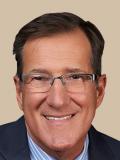
Dr. Ronald Brown, a noted expert on the topic of ADHD has served as the Associate Vice Chancellor for Academic (Health Affairs) at the University of North Texas System.
Dr. Brown completed his Ph.D. from Georgia State University and has been the past President of the Society of Pediatric Psychology and the Association of Psychologists of Academic Health Centers.
He is a board-certified clinical health psychologist and has been an active clinician, teacher, advocate and investigator. He served as a member of the Behavioral Medicine study section of the NIH and chaired several special panels at NIH. He currently serves as the Editor of Professional Psychology: Research and Practice.
Dr. Ronald Brown’s area of specialization includes behavioral sciences, pediatric psychology, attention deficit disorders, neuropsychology, psychopharmacology, learning disabilities and psychosocial oncology.

Amanda Fishley, MA, BCBA, COBA is a Board Certified Behavior Analyst and Certified Ohio Behavior Analyst. She received her Master’s degree in Special Education/ABA from The Ohio State University. She has been working with in the field of ABA for over ten years.
She has experience working with children, adolescents and adults in school, home and mental health settings. These experiences have allowed her to work closely with parents, teachers, paraprofessionals, as well as mentoring and supervising behavior analysts. She is the Associate Director of Clinical Solutions for Special Learning, creating and presenting educational materials and promoting Special Learning’s mission to positively impact the special needs community.
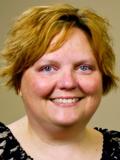
Jennifer LaLuzerne has been a Clinic Director at Step By Step Academy, Inc. since May 2011. Before that, she served as Program Manager and social worker, starting in 2008. At Step By Step, she is responsible for supervising Program Managers, their staff, and their caseloads, collaborating in the development and monitoring of treatment plans, behavior plans, and ongoing treatment integrity.
Jennifer has a Bachelor's Degree in social work from the University of Wisconsin - Madison, her Master's Degree in social work from The Ohio State University, and she is completing coursework towards her BCBA through the University of North Texas.
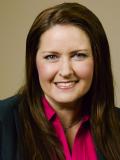
Michele LaMarche is the co-founder of Special Learning, Inc. She is also the founder and Executive Director of Step By Step Academy (SBSA), a centre-based non-profit autism treatment centre in Columbus, Ohio. Ms. LaMarche has worked in the field of Applied Behavior Analysis for more than fifteen years, and she develops the ABA curricula used in SBSA's programs.

Clinic Director at Step By Step Academy, a position she has held since 2009, where she previously served as Training and Behavior Plan Supervisor,Outreach and Training Coordinator, Program Supervisor/Outreach Support Technician and Behavior Technician.
Christine regularly publishes and presents at professional conferences on the topic of autism and behavioral support. Her areas of expertise include ABA, training, individual education plans (IEPs), treatment planning and behavior modification and behavior management. She has a BA in Psychology and minor in Sociology from Ohio State University. Now a Board Certified Behavior Analyst (BCBA), Christine trained in Applied Behavior Analysis with the University of North Texas and is certified in Crisis Prevention.

Lynn M. Dudek is the Autism and Medical Rehabilitation Manager at Easter Seals Central and SE Ohio, Inc. and the owner of ASDSLP, LLC. She is a speech-language pathologist who has specialized in the treatment of autism spectrum disorder for close to 20 years. Lynn has presented at the local, state, and national level on topics regarding autism, communication and assessment. Her passion for advocacy, education, and effective treatment directs her professional and personal activities.
Lynn recently completed coursework for completion of her BCBA. She currently serves on the Ohio Autism Coalition, the Autism Alliance and Advisory Board for speechpathology.com, and the National Autism Spokesperson Network.

Erin Lombard is currently a behavior consultant with over 12 years of experience working with children with autism and developmental disabilities in homes, schools, and center based programs. She was previously a certified Special Education teacher in Arizona. Along with providing consultation through SBSA, she also currently teaches graduate level Positive Behavior Support courses at Northern Arizona University.
Erin is originally from California where she finished her undergraduate degree in Child and Adolescent Studies from California State University, Fullerton. She obtained her master's degree in Special Education from the University of Phoenix. She completed her coursework in applied behavior analysis through the University of North Texas. She is currently working on her PhD in Psychology at Capella University.
No reviews yet!
For adding a review for this product you need to purchase current product and be authorized.