
CE Bundle 3: School-Based

School-based CE in one bundle: classroom participation, peer learning and collaboration with educators.
Presenter credits across the recordings: Michele LaMarche, Miranda Schehr, Peter Gerhardt, Amanda Fishley, Ann Beirne, Juliette L. Riordan, Ronnie Detrich, Shawn E. Kenyon, Jennifer Rumfola, Dr Sarah Haney, Maria Nicolaou, Dr. Hannah Macnaul, Cynthia Ring. Additional recording credits appear in the session guide below.
The classroom sessions examine participation, teaching methods and peer interaction. The collaboration panels explore educator and behavior-analyst roles, staff buy-in and practical data collection. Transition recordings connect school planning with everyday skills, vocational preparation and adult life. Ronnie Detrich's treatment-integrity discussion asks what students actually received from an intervention.
Recording context: This collection combines recordings from different periods. The ethics-code panel was recorded October 18, 2023. Recording dates for the clinical informed-consent and neurodiversity-affirming Journal Club sessions have not been established. The descriptions summarize the sessions as recorded.
Guide to the 17 recordings
Intro to Strategies to Increase Beginner Classroom Participation Skills
For school teams examining participation during lessons, turn-taking and transitions, this introductory recording examines assessment, reinforcement programs and visual supports through classroom examples. The catalogue attributes it to Michele LaMarche, while the session itself leaves the presenter unnamed.
Strategies to Increase Beginner Classroom Participation Skills: Teaching Methods in Application
Michele LaMarche compares eight ways to teach skills in this recorded classroom-participation session. She moves from discrete trials and natural environment teaching to verbal behavior, pivotal response training, fluency, direct instruction and peer learning, explaining how skills and teaching conditions influence method selection.
Peer Mediated Interventions: More Than Just Play Skills
Michele LaMarche and Miranda Schehr examine what peer-mediated intervention requires beyond placing learners together. The recording follows peer selection, explicit training and cooperative activities for learners with autism, then considers how to assess interaction with familiar peers, in other settings and with peers who have not been trained.
Transition Survival 102: Principal Skills to Assess and Learn for Successful Transition
Planning adult life involves deciding which everyday skills need attention first. In this recording, Michele LaMarche examines communication, household routines, work habits and community participation for autistic adolescents and adults, connecting individual assessment with task analysis and practice in the settings where skills will be used.
Transition Survival 101: How and When to Create a Transition Plan
For preparing an adolescent with autism for the move from school into adult services, Michele LaMarche's recorded session examines what a transition plan needs to contain. She walks through the transition team, assessment domains, goals, responsibilities, and review timelines, with attention to family preferences and supports available in the person's everyday environment.
Transition Survival 104: Vocational Topics and Job Coaching
Matching a job to a person's interests also involves understanding the workplace's demands and available support. Michele LaMarche examines vocational preparation for autistic adolescents and young adults, including hands-on assessment, job tryouts, communication needs and the roles of job coaches, coworkers and supervisors.
Social Skills Part 2: Elementary Social Skills Predictors of Future Success
For elementary school teams planning social skills work, Michele LaMarche examines perspective taking, peer play and the challenge of using learned skills in everyday interactions. This recorded second installment reviews theory of mind and executive functioning alongside video modeling, cooperative activities and SODA stories, with limits on what study results show.
Transition in Practice Series with Dr. Peter Gerhardt: Planning for Transition (Middle School to High School)
For families and school teams planning the move to high school, Dr. Peter Gerhardt examines how future work, home and community goals shape a transition IEP. Amanda Fishley and guest panelists contribute examples involving daily living skills, student participation and shared responsibilities.
Multidisciplinary Collaboration Series- Module 3: EDUCATORS & ABA
For school teams clarifying classroom responsibilities, this recorded panel examines educator, paraprofessional and behavior-analyst roles, tiered supports and shared goals. The catalogue credits Ann Beirne and Juliette L. Riordan; the transcript introduces the speakers as Ann and Julie.
Addressing Challenging Behaviors Ethically in Schools Module 2: Must-have Skills (and Understanding) for School-based BCBAs and Other Service Providers
For behavior analysts moving into schools, Ronnie Detrich, Shawn Kenyon and Jennifer Rumfola examine how to earn staff buy-in and plan within classroom routines. This April 2020 panel connects collaboration with behavioral principles, implementation planning and teacher data collection.
Addressing Challenging Behaviors Ethically in Schools Module 5: Maintaining Treatment Integrity and Thorough Data Analysis
For school teams trying to understand limited progress, this recording examines what students actually received from an intervention. Ronnie Detrich, with moderator Jennifer Rumfola, discusses treatment integrity, student outcome data and the practical demands of monitoring implementation in classrooms.
2022 BCBA Ethics Code in Practice: Responsibility as a Professional
Jon Bailey and Erica Wilson, with Karen Chung moderating, discuss the 2022 ethics code through hotline scenarios. They compare an ethics-code perspective with a clinician's response, including defined roles, competence, cultural responsiveness and conflicting organizational incentives.
An evaluation of a renewal-mitigation procedure for inappropriate mealtime behavior
In this recorded Journal Club, Sarah Haney McDevitt examines renewal: the return of mealtime refusal after treatment when the context changes. With host Karen Chung, she reviews a seven-child study of feeder, food and setting changes, caregiver training, and the limits of renewal-mitigation procedures.
Clinical Informed Consent And ABA
The clinical informed-consent discussion treats consent as an ongoing conversation. The presenters model checking understanding, explaining meaningful alternatives and discussing individual concerns through hypothetical sleep, assessment and feeding examples. The catalogue credits Abraham Graber and Jessica Graber; the supplied recording text introduces Abraham and Jess.
ABA in Practice - Session 5: Beginning and Implementing a New Program
ABA in Practice Session 5 records Maria’s discussion of beginning a program, with supervision of behavior technicians as its central thread. It includes pairing scenarios, teaching demonstrations, parent communication, home-workspace preparation and end-of-session routines.
Effects of an adapted telehealth training curriculum for Registered Behavior Technicians
In this Journal Club recording, Hannah Macnaul explains an adapted telehealth curriculum for technicians coaching caregivers under BCBA supervision. She describes behavioral skills training, session-planning checklists, supervised practice, and a novel-family probe, then reviews reported therapist fidelity results and study limitations.
Neurodiversity-Affirming Applied Behavior Analysis
The neurodiversity-affirming ABA discussion examines individual language preferences, client-valued goals, meaningful choice and responses to assent withdrawal. The catalogue credits Lauren Allen; the recording introduces the presenter as Dr. Lauren. Its examples distinguish choosing between two offered items from being able to choose another activity or refuse.
Course evaluation records by recording
These records concern the named recordings, not the library as a whole. Source: Special Learning course evaluations, snapshot October 11, 2026.
Intro to Strategies to Increase Beginner Classroom Participation Skills: 4.20/5 across 43 complete six-score responses, from 327 recorded rating responses.
Strategies to Increase Beginner Classroom Participation Skills: Teaching Methods in Application: 4.15/5 across 31 complete six-score responses, from 246 recorded rating responses.
Peer Mediated Interventions: More Than Just Play Skills: 4.20/5 across 19 complete six-score responses, from 215 recorded rating responses.
Transition Survival 102: Principal Skills to Assess and Learn for Successful Transition: 4.31/5 across 27 complete six-score responses, from 191 recorded rating responses.
Transition Survival 101: How and When to Create a Transition Plan: 4.08/5 across 36 complete six-score responses, from 260 recorded rating responses.
Transition Survival 104: Vocational Topics and Job Coaching: 4.45/5 across 20 complete six-score responses, from 163 recorded rating responses.
Social Skills Part 2: Elementary Social Skills Predictors of Future Success: 4.25/5 across 44 complete six-score responses, from 393 recorded rating responses.
Transition in Practice Series with Dr. Peter Gerhardt: Planning for Transition (Middle School to High School): 4.29/5 across 142 complete six-score responses, from 992 recorded rating responses.
Multidisciplinary Collaboration Series- Module 3: EDUCATORS & ABA: 4.27/5 across 25 complete six-score responses, from 245 recorded rating responses.
Addressing Challenging Behaviors Ethically in Schools Module 2: Must-have Skills (and Understanding) for School-based BCBAs and Other Service Providers: 4.47/5 across 54 complete six-score responses, from 305 recorded rating responses.
Addressing Challenging Behaviors Ethically in Schools Module 5: Maintaining Treatment Integrity and Thorough Data Analysis: 4.47/5 across 41 complete six-score responses, from 250 recorded rating responses.
2022 BCBA Ethics Code in Practice: Responsibility as a Professional: 4.01/5 across 68 complete six-score responses, from 462 recorded rating responses.
An evaluation of a renewal-mitigation procedure for inappropriate mealtime behavior: No mean is available in this evaluation snapshot; 0 rating responses are recorded.
Clinical Informed Consent And ABA: No mean is available in this evaluation snapshot; 0 rating responses are recorded.
ABA in Practice - Session 5: Beginning and Implementing a New Program: No mean is available in this evaluation snapshot; 0 rating responses are recorded.
Effects of an adapted telehealth training curriculum for Registered Behavior Technicians: No mean is available in this evaluation snapshot; 0 rating responses are recorded.
Neurodiversity-Affirming Applied Behavior Analysis: No mean is available in this evaluation snapshot; 0 rating responses are recorded.
What learners said about individual recordings
The following anonymous responses describe their named sessions. They include praise and criticism; they are not claims about results from buying this library.
I like the examples and what to do in certain situations.
Anonymous feedback for Helping Children with Autism Participate in the Classroom, 2024
More training on self-monitoring tools for integrity checks and some case examples.
Anonymous feedback for ABA in Schools - Part 5: Treatment Integrity, 2024
The answers by the speakers should have been screened before the live event. Unfortunately, I don’t believe any of the three case scenarios were answered with clarity and never drove home the point of how you can collaborate with educators.
Anonymous feedback for Multidisciplinary Collaboration Series- Module 3: EDUCATORS & ABA, 2023
Purchase and access details
Five things you don't get from another CE library
- And with our SWAP feature, you can change out any topic you may have already taken for another from our extensive list.
- An AI Study Companion for this bundle. Ask it about any training in here and it answers from that training's own material. It'll also make you study guides, flashcards and practice quizzes, or an audio summary you can listen to on the drive in. You open it with a Google account, the same one you use for Gmail. We don't charge for it.
- Try it free for 7 days. Watch a session, then decide. Start your 7-day free trial →
- Downloadable slide decks for 16 of the 17 sessions. Files you keep and can put in front of a client on Monday.
- Your certificate issues the moment you pass. Pass each session quiz at 80% and the certificate is yours immediately. Under 80%, take the quiz again; there is no limit on retakes. You add the CEUs to your BACB account yourself and upload our certificate; we don't report them to the BACB for you. CEU processing is included.
What $199 buys, against what $315 buys
This bundle is $199, $116 less than any of our $315 bundles.
What the CE hours cover
32.5 BACB CE hours, including 3.5 hours of Supervision.
For BCBAs who supervised RBTs, BCaBAs or trainees during the cycle, the supervision requirement is 3 CE hours under the current BACB handbook; the BACB's 2027 requirements raise it to 4 and do not say which cycles that covers, so if your cycle closes in 2027 and you supervised, plan for half an hour more supervision CE than this bundle carries. Supervision CEUs are only required if you supervised an RBT or BCaBA on record, or a trainee pursuing BCBA or BCaBA certification, at any point in your cycle.
The sessions
- Intro to Strategies to Increase Beginner Classroom Participation Skills (2 hours)
- Strategies to Increase Beginner Classroom Participation Skills: Teaching Methods in Application (2 hours)
- Peer Mediated Interventions: More Than Just Play Skills (2 hours)
- Transition Survival 102: Principal Skills to Assess and Learn for Successful Transition (2 hours)
- Transition Survival 101: How and When to Create a Transition Plan (2 hours)
- Transition Survival 104: Vocational Topics and Job Coaching (2 hours)
- Social Skills Part 2: Elementary Social Skills Predictors of Future Success (2 hours)
- Transition in Practice Series with Dr. Peter Gerhardt: Planning for Transition (Middle School to High School) (4 hours)
- Multidisciplinary Collaboration Series- Module 3: EDUCATORS & ABA (2 hours)
- Addressing Challenging Behaviors Ethically in Schools Module 2: Must-have Skills (and Understanding) for School-based BCBAs and Other Service Providers (2 hours)
- Addressing Challenging Behaviors Ethically in Schools Module 5: Maintaining Treatment Integrity and Thorough Data Analysis (2 hours)
- 2022 BCBA Ethics Code in Practice: Responsibility as a Professional (2 hours)
- An evaluation of a renewal-mitigation procedure for inappropriate mealtime behavior (1 hour)
- Clinical Informed Consent And ABA (1 hour)
- ABA in Practice - Session 5: Beginning and Implementing a New Program (2.5 hours)
- Effects of an adapted telehealth training curriculum for Registered Behavior Technicians (1 hour)
- Neurodiversity-Affirming Applied Behavior Analysis (1 hour)
How it works
- 100% video, on demand, 24x7. Stop and resume wherever you left off.
- Pass each training's quiz at 80% and its certificate issues immediately. CEU processing is included.
- BACB ACE Provider number OP-14-2437.
Before you buy
CEs for any training can be claimed once. If you've already claimed CEs for a title in this bundle, swap it rather than repeating it. Each purchase is one user license; only the assigned user can access the trainings and earn CEUs.
Explore related learning
MANDATORY DISCLAIMER: The Behavior Analyst Certification Board ("BACB") does not sponsor, approve, or endorse Special Learning, the materials, information, or sessions identified herein. For cancellations and refunds, please see our policy.
Continuing Education Credits
Meet the Presenters

Michele LaMarche is the co-founder of Special Learning, Inc. She is also the founder and Executive Director of Step By Step Academy (SBSA), a centre-based non-profit autism treatment centre in Columbus, Ohio. Ms. LaMarche has worked in the field of Applied Behavior Analysis for more than fifteen years, and she develops the ABA curricula used in SBSA's programs.

Peter Gerhardt, Ed.D., is the Executive Director of the EPIC School in Paramus, NJ. Dr. Gerhardt has more than 35 years’ experience utilizing the principles of Applied Behavior Analysis in support of adolescents and adults with autism spectrum disorders in educational, employment, residential and community-based settings. He is the author or co-author on a number of articles and chapters on the needs of adolescents and adults with ASD and has presented nationally and internationally on this topic.
Dr. Gerhardt serves as Chairman of the Scientific Council for the Organization for Autism Research and is on numerous professional advisory boards including the Cambridge Center for Behavioral Studies. He received his doctorate from Rutgers, The State University of New Jersey’s Graduate School of Education.

Amanda Fishley, MA, BCBA, COBA is a Board Certified Behavior Analyst and Certified Ohio Behavior Analyst. She received her Master’s degree in Special Education/ABA from The Ohio State University. She has been working with in the field of ABA for over ten years.
She has experience working with children, adolescents and adults in school, home and mental health settings. These experiences have allowed her to work closely with parents, teachers, paraprofessionals, as well as mentoring and supervising behavior analysts. She is the Associate Director of Clinical Solutions for Special Learning, creating and presenting educational materials and promoting Special Learning’s mission to positively impact the special needs community.

Ronnie Detrich, Ph.D., has been providing behavior analytic services for over 50 years. His work can be characterized as thorough-going behavior analysis drawing from the conceptual, experimental, and applied branches of our discipline.
In recent years, Ronnie’s work has focused on the challenges of achieving adequate levels of treatment integrity in large systems, the role of the evidence-based practice movement in behavior analysis, and the large-scale implementation of effective practices in public schools. He is a trustee of the Cambridge Center for Behavioral Studies and is on the editorial boards of Perspectives in Behavior Science and Exceptional Children. He serves as an Associate Editor for the Journal of Positive Behavior Intervention. Ronnie has also served on the editorial board of Behavior Analysis in Practice and was the Coordinator of ABAI’s Practice Board.

Dr. Shawn Kenyon, BCBA-D has been in the fields of Applied Behavior Analysis and Special Education since 1995. Throughout his career he has been a Program and Clinical Director in private schools as well as public schools and non-public special education schools in Massachusetts and California while also working and consulting nationally across several states and internationally in Brazil. In his current position, he directs behavioral services in the special education department for a large public school district in southern California.?
Dr. Kenyon is the founder and owner of a small behavioral consulting company, also located in southern California. He has been an instructor in the graduate program in Applied Behavior Analysis at Northeastern University, located in Boston MA., since 2007. Dr. Kenyon has also held faculty positions at Simmons University and Endicott College, both also located in Massachusetts and he currently serves as a reviewer for the journal Behavior Analysis in Practice.

Jennifer is a dually credentialed professional, licensed and certified as a Speech-Language Pathologist and Behavior Analyst (BCBA). She possesses expertise and advanced skills in teaching language to children on the autism spectrum. She has helped clients across the life span from Early Intervention, Preschool through School in both home and center-based settings. Over the past 10 years, she has successfully integrated strategies and techniques from both disciplines to support individuals with autism and their educational teams.

Ann Beirne, MA, BCBA is a Board Certified Behavior Analyst with over two decades of experience working with individuals with autism spectrum disorder.
She has provided direct services to children and families in home environments, schools, and residential programs. Her work with this population has spanned the lifespan, including toddlers, young children, adolescents and adults with developmental disabilities.
Ms. Beirne is co-author of the textbook Understanding Ethics in Behavior Analysis: Practical Applications available from Routledge Publishing in 2019.

Julie is a dually credentialed Occupational Therapist and Board Certified Behavior Analyst. She started working with children on the autism spectrum in 1994 as a behavior technician. This sparked a passion for working with these amazing kids. Julie has served as a BCBA and/ or OT in home, center, and community based programs. She has also worked in private schools and consulted in public schools. She has a unique perspective encompassing her experiences as an OT, BCBA, and parent, and firmly believes in the importance of collaboration with families and multiple disciplines in order to help children achieve their full potential in all areas of their lives.

Ms. Cynthia Ring is a Licensed Social Worker and holds a B.S. in Psychology and a M.S.W. Cynthia is currently working on a Doctorate in Forensic Psychology. Cynthia plans to work on getting a BCBA in January of 2012. Current projects and interests include transitions to employment for people with intellectual and developmental disabilities, people with intellectual and developmental disabilities in the criminal justice system, recidivism, functions of violent behavior/aggression, and sports and recreational programs for people with disabilities.
Cynthia is currently employed as a social worker and director of the day habilitation services at Step By Step Academy in Worthington, Ohio. She has been serving individuals with autism and their families since 2006.

Dr. Bailey received his PhD from the University of Kansas and is currently Professor Emeritus of Psychology at Florida State University where he was a member of the graduate faculty for 38-years and produced a record 63 PhDs. He is currently Director of the FSU Panama City Masters Program in Applied Behavior Analysis.
Dr. Bailey has published over 100 peer-reviewed research articles, is a past editor of the Journal of Applied Behavior Analysis, and is co-author of Research Methods in Applied Behavior Analysis, How Dogs Learn, Ethics for Behavior Analysts, 2nd Expanded Edition, How to Think Like a Behavior Analyst, and 25 Essential Skills and Strategies for Professional Behavior Analysts, all co-authored with Dr. Mary Burch.

Karen is the Founder and CEO of Special Learning. She started the company in 2010 after learning about the effectiveness of Applied Behavior Analysis (ABA) juxtaposed against the reality that over 95% of the world did not have access to ABA. As an entrepreneur with over 20 years of corporate experience, she started Special Learning to leverage existing and emerging technology to make quality ABA resources and services available to parents, educators and professionals around the world.
Karen’s entrepreneurial experience includes starting and growing a diversity retained executive search firm specializing in placing women and minority executives in leadership positions of Fortune 1,000 companies. Her investment banking background includes working with various venture capital and private equity companies to facilitate deal flow while representing CEOs of rapidly growing companies seeking to raise equity and debt capital for various middle market businesses and commercial real estate developers. Her corporate background includes various leadership and functional roles in Fortune 1,000 and middle market companies. Her additional entrepreneurial activities include owning and operating high end boutique
She graduated with a Masters of Management degree from Kellogg Graduate School of Management of Northwestern University. She is a Certified Public Accountant and a recipient of the Elijah Watts Sells Award from the American Institute of Certified Public Accounts (AICPA), an award granted to less than top 5% of all CPA exam candidates.


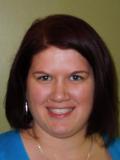
Miranda Schehr is the Clinic Transition Director of Step by Step Academy. As a clinic transition director she directs the treatment plans of multiple clients through management, training and supervision of clinical staff. Before her involvement with SBSA she worked as an Intervention Specialist in Applied Behavioral Services, where she was responsible in the implementation of treatment of multiple clients and their families through teaching and training in the classroom and home environments.
She earned her Bachelor of Science in Mild-Moderate Special Education at Xavier University, Cincinnati, OH, completed a graduate coursework in Behavior Analysis in the University of North Texas, Denton TX; and she is anticipating the completion of her Masters of Education in Cognitive and Behavioral Disabilities in August 2012.
Jeffrey Monge
Jeffrey Monge, MS, BCBA