Transition Survival 101- How and When to Create a Transition Plan
You could be the first person to provide your opinion.

For preparing an adolescent with autism for the move from school into adult services, Michele LaMarche's recorded session examines what a transition plan needs to contain. She walks through the transition team, assessment domains, goals, responsibilities, and review timelines, with attention to family preferences and supports available in the person's everyday environment.
Presenter biographies: Michele LaMarche.
LaMarche describes the loss of school-based supports at adulthood and the barriers families encounter across separate service systems.
The assessment walkthrough covers personal and family history, life goals, living arrangements, adaptive skills, interests, and vocational readiness. A hanger example illustrates the importance of checking whether home routines can support a skill taught elsewhere.
The plan discussion brings together service needs, goals, a timeline with benchmarks, and a responsibility checklist, followed by review arrangements and the roles of the individual, family, school, and adult-service providers.
What does this recording cover?
- The plan assigns responsibilities across the individual, family, school staff, and adult-service team.
- The assessment covers personal history, preferences, living arrangements, adaptive skills, and vocational readiness.
- The natural-environment example examines whether everyday supports can maintain a taught skill.
- The planning discussion connects goals, services, timelines, benchmarks, and follow-up reviews.
Recording context: Recorded June 21, 2012, this session discusses U.S. laws and services as presented at that time and does not establish current requirements or availability.
Three selected learner comments
The six-item evaluation mean was 4.08/5 across 36 complete responses, from 260 recorded rating responses. This mean includes only complete six-score responses. Source: Special Learning's course evaluation records, snapshot October 11, 2026.
Three selected anonymous responses appear below, with the wording and spelling retained. They describe learners' experiences and requests; they are not a guarantee of results or a claim that these comments represent every learner.
I loved this straight forward presentation
Course evaluation response, 2023
it was boring and was not engaging - better as a pod cast than a video.
Course evaluation response, 2023
Switch between speaker and PowerPoint presentation
Course evaluation response, 2024
Explore related recorded discussions
MANDATORY DISCLAIMER: The Behavior Analyst Certification Board (“BACB”) does not sponsor, approve, or endorse Special Learning, the materials, information, or sessions identified herein.
Continuing Education Credits
Meet the Presenters

Ms. Cynthia Ring is a Licensed Social Worker and holds a B.S. in Psychology and a M.S.W. Cynthia is currently working on a Doctorate in Forensic Psychology. Cynthia plans to work on getting a BCBA in January of 2012. Current projects and interests include transitions to employment for people with intellectual and developmental disabilities, people with intellectual and developmental disabilities in the criminal justice system, recidivism, functions of violent behavior/aggression, and sports and recreational programs for people with disabilities.
Cynthia is currently employed as a social worker and director of the day habilitation services at Step By Step Academy in Worthington, Ohio. She has been serving individuals with autism and their families since 2006.
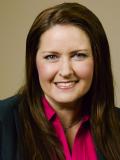
Michele LaMarche is the co-founder of Special Learning, Inc. She is also the founder and Executive Director of Step By Step Academy (SBSA), a centre-based non-profit autism treatment centre in Columbus, Ohio. Ms. LaMarche has worked in the field of Applied Behavior Analysis for more than fifteen years, and she develops the ABA curricula used in SBSA's programs.
No reviews yet!
For adding a review for this product you need to purchase current product and be authorized.