CEU Bundle: Video CE Library 1

This 18-recording library brings together behavior assessment, staff implementation, social skills, collaboration, transition, ethics and supervision. Recorded teaching includes Michele LaMarche, Christine Austin, Erin Lombard, Peter Gerhardt and Jon Bailey. Use the module guide to choose a topic and check the recording context before applying its examples.
The useful comparison is between the individual recordings: their teaching, historical context and learner feedback.
Declared BACB CE: 32.5 hours: 25 general, 4 ethics and 3.5 supervision. These are the library's declared categories, not a total inferred from video durations. Check your own requirements and previously claimed titles before purchasing.
Price and access: $199 for one assigned user and 12 months of access. The current purchase terms specify one payment with no renewal.
Using the library
- SWAP: Change a topic you have already taken for another from our training catalogue. CEs for an individual training can be claimed once.
- Study support: Open this library's AI Study Companion with a Google account to ask questions about the material and create study guides, flashcards or practice quizzes. It is included at no extra charge.
- Slides: Downloadable slide decks accompany 17 of the 18 recordings.
- Certificates: Pass each session quiz at 80% for its certificate. Certificates issue immediately after passing; retakes are unlimited and CEU processing is included. You enter the CEUs in your own BACB account and upload the certificate.
Watch on demand and resume where you left off. Each purchase is one user license; only the assigned user can access the trainings and earn CEUs. Prefer to choose your own titles? Explore All Access.
BACB ACE Provider: OP-14-2437.
Recording context: This library combines older lectures and later panel and Journal Club discussions. Some recordings use earlier terminology, professional-code examples or clinical procedures. They do not establish current legal requirements, replace individualized clinical judgment or guarantee treatment results.
Presenter credits: Michele LaMarche, Christine Austin, Erin Lombard, Peter Gerhardt, Jon S. Bailey. Maria Nicolaou teaches ABA in Practice, Session 5. The recorded presenters are credited for their teaching; these summaries and evaluation comparisons describe that material.
The 18 recordings
Strategies to Increase Beginner Classroom Participation Skills: Decreasing Problem Behavior with an FBA: Part 1
Christine Austin examines how to define a behavior and investigate its function. The recording compares interviews and assessment instruments with ABC observation and experimental analysis, and discusses consent, risk and staff preparation. It is an older assessment practicum; its procedures require current clinical judgment.
Strategies to Increase Beginner Classroom Participation Skills: Decreasing Problem Behavior with a FBA: Part 2 - The Intervention and Behavior Support Plan
The second part moves from assessment findings to a behavior support plan. It covers prevention, communication alternatives, reinforcement, staff implementation and review of progress, using historical cases. Restrictive procedures appear in the recording and need to be considered in their historical context.
Ensuring Treatment Integrity
Christine Austin and Erin Lombard connect measurement with day-to-day staff practice. Their July 2012 session compares data-collection methods and observer agreement, then examines role play, feedback, staff preparation and the conditions that help a plan survive implementation.
Severe Problem Behavior
The presenters discuss severe behavior through assessment, communication alternatives, prevention and staff consistency. Their historical case examples include inconclusive and unsuccessful interventions. The session discusses medical and safety risks; it is not a stand-alone guide to treating severe behavior.
Social Skills Part 1: Toddler to Preschool Social Skills
Michele LaMarche examines early social and communication skills, including joint attention, symbolic play, imitation, affect sharing and working memory. The discussion distinguishes responding to another person from initiating interaction and reviews research available when the session was recorded.
Social Skills Part 2: Elementary Social Skills Predictors of Future Success
The elementary-school discussion moves through perspective taking, executive function, social cognition and cooperative play. Michele LaMarche compares teaching examples such as video modeling, peer activities and structured stories, while distinguishing answering a question from using a skill in daily life.
Transition Survival 103: Advanced Social Skills for Adolescent and Adults - Part 2
This older social-skills session organizes self-regulation and relationship-building skills into prerequisite, beginner and advanced groups. It discusses assessment, rehearsal and practice across contexts. Its terminology and social expectations reflect the recording period and should be evaluated against individual preferences and current practice.
Transition in Practice Series with Dr. Peter Gerhardt: Planning for Transition (Middle School to High School)
Peter Gerhardt and the panel work backward from adult participation to school and family priorities. Their examples connect community, employment and daily-living skills with assessment and collaborative IEP planning. The discussion also asks whether a taught skill is used outside the teaching setting.
SLP & ABA Collaboration Series: Using Collaboration to Generate Best Outcomes... Quicker
The SLP and ABA panel compares terminology, professional competencies, goals and measurement. Examples connect communication targets with behavioral function and coordinated teaching. The emphasis is on understanding a colleague's approach and using shared information, rather than assuming that different professional language means different goals.
Multidisciplinary Collaboration Series- Module 1: IEP Team Multidisciplinary Collaboration
The IEP-team panel examines professional roles, parent and student participation, shared goals and barriers to collaboration. It compares multidisciplinary, interdisciplinary and transdisciplinary working arrangements. Its legal and professional-code examples describe the recorded discussion, not current jurisdiction-specific advice.
2022 BCBA Ethics Code in Practice: Responsibility as a Professional
Jon Bailey and the panel apply Section 1 of the 2022 ethics code to hotline and practice scenarios. The October 2023 discussion addresses honesty, competence, cultural responsiveness, supervision and organizational pressure. It illustrates ethical reasoning; its employment and legal examples do not establish current legal requirements.
Clinical Informed Consent And ABA
The Journal Club discussion treats informed consent as an ongoing conversation about choices, understanding, risks and alternatives. Role plays explore assessment, sleep and feeding situations. The presenters identify their legal discussion as informational; it does not provide legal advice for an individual practice.
An evaluation of a renewal-mitigation procedure for inappropriate mealtime behavior
This research discussion asks why mealtime behavior can return when the caregiver, food or setting changes. It examines reported findings from a small study, mixed results and the limits of the procedures studied. Feeding work is discussed in the context of specialized training and multidisciplinary care.
Teaching graduate students to translate non-behavioral treatment into behavioral principles
The presenter examines teaching graduate students to translate other disciplines' recommendations into behavioral principles. The study uses a worksheet, modeling, rehearsal and feedback. Improved translation scores did not establish treatment effectiveness or the quality of later treatment decisions.
Cultural Responsiveness Curriculum for Behavior Analysts: A meaningful step towards social justice.
The cultural-responsiveness discussion connects lived experience, humility and measurable practitioner behavior. It examines a competency tool, participation in planning, ableism and disability models, then considers whose needs a goal serves and how autistic perspectives can inform professional learning.
ABA in Practice - Session 5: Beginning and Implementing a New Program
Session 5 of ABA in Practice follows the start of a new program through rapport, individualized instruction, technician rehearsal and communication with families. It also considers preparation of the workspace, natural and structured teaching, and handover to caregivers. The recording emphasizes supervisory support for implementation.
Effects of an adapted telehealth training curriculum for Registered Behavior Technicians
The telehealth Journal Club examines explicit preparation for remote caregiver coaching: technology, privacy, planning, modeling, rehearsal and feedback. The reported study measured practitioner coaching fidelity. The presenter explains design limitations; the results are not a quantified claim about child outcomes.
Neurodiversity-Affirming Applied Behavior Analysis
The neurodiversity-affirming discussion considers language preferences, client participation, choice, assent and practitioner responsiveness. Examples ask whether goals serve the person or primarily reflect others' expectations. The presenter also identifies the need for further empirical validation.
What learners said about individual recordings
These are complete anonymous responses to improvement questions submitted in 2023. They concern particular recordings, not a review of this library as a whole. They describe presentation experience and preferences; they do not measure treatment effectiveness.
Refilm it. This video crammed too much info in. It was rushed in parts. Eliminate or redo the section dealing with how "hard" the job is.
Anonymous learner, 2023, Ensuring Treatment Integrity.
This training was very helpful. I liked the pacing of it and the use of videos. I can't think of anything to improve except maybe to have the slides available while the person was speaking
Anonymous learner, 2023, Social Skills Part 2: Elementary Social Skills Predictors of Future Success.
Add more opportunities to engage, provide more scenario examples
Anonymous learner, 2023, 2022 BCBA Ethics Code in Practice: Responsibility as a Professional.
Evaluation evidence by recording
Snapshot: October 12, 2026. Each mean below uses complete six-item rating forms for that recording only. Form and answer counts are not counts of distinct learners. Individual rating answers outside complete forms are excluded from the means. Unavailable means are shown explicitly; they are not zero ratings.
| Recording | Mean / 5 | Forms | Answers |
|---|---|---|---|
| Strategies to Increase Beginner Classroom Participation Skills: Decreasing Problem Behavior with an FBA: Part 1 | No mean | 0 | 378 |
| Strategies to Increase Beginner Classroom Participation Skills: Decreasing Problem Behavior with a FBA: Part 2 - The Intervention and Behavior Support Plan | 4.09 | 39 | 376 |
| Ensuring Treatment Integrity | 4.36 | 46 | 416 |
| Severe Problem Behavior | 4.15 | 53 | 499 |
| Social Skills Part 1: Toddler to Preschool Social Skills | 4.16 | 61 | 441 |
| Social Skills Part 2: Elementary Social Skills Predictors of Future Success | 4.25 | 44 | 393 |
| Transition Survival 103: Advanced Social Skills for Adolescent and Adults - Part 2 | 4.20 | 40 | 272 |
| Transition in Practice Series with Dr. Peter Gerhardt: Planning for Transition (Middle School to High School) | 4.29 | 142 | 992 |
| SLP & ABA Collaboration Series: Using Collaboration to Generate Best Outcomes... Quicker | 4.37 | 20 | 196 |
| Multidisciplinary Collaboration Series- Module 1: IEP Team Multidisciplinary Collaboration | 4.42 | 40 | 291 |
| 2022 BCBA Ethics Code in Practice: Responsibility as a Professional | 4.01 | 68 | 462 |
| Clinical Informed Consent And ABA | No mean | 0 | 0 |
| An evaluation of a renewal-mitigation procedure for inappropriate mealtime behavior | No mean | 0 | 0 |
| Teaching graduate students to translate non-behavioral treatment into behavioral principles | No mean | 0 | 0 |
| Cultural Responsiveness Curriculum for Behavior Analysts: A meaningful step towards social justice. | No mean | 0 | 0 |
| ABA in Practice - Session 5: Beginning and Implementing a New Program | No mean | 0 | 0 |
| Effects of an adapted telehealth training curriculum for Registered Behavior Technicians | No mean | 0 | 0 |
| Neurodiversity-Affirming Applied Behavior Analysis | No mean | 0 | 0 |
Later Journal Club entries in this dated source have no rating answers. Feedback was not transferred from another catalogue entry, including the same-recording reference used for Clinical Informed Consent.
MANDATORY DISCLAIMER: The Behavior Analyst Certification Board ("BACB") does not sponsor, approve, or endorse Special Learning, the materials, information, or sessions identified herein. For cancellations and refunds, see our policy.
Meet the Presenters

Clinic Director at Step By Step Academy, a position she has held since 2009, where she previously served as Training and Behavior Plan Supervisor,Outreach and Training Coordinator, Program Supervisor/Outreach Support Technician and Behavior Technician.
Christine regularly publishes and presents at professional conferences on the topic of autism and behavioral support. Her areas of expertise include ABA, training, individual education plans (IEPs), treatment planning and behavior modification and behavior management. She has a BA in Psychology and minor in Sociology from Ohio State University. Now a Board Certified Behavior Analyst (BCBA), Christine trained in Applied Behavior Analysis with the University of North Texas and is certified in Crisis Prevention.

Michele LaMarche is the co-founder of Special Learning, Inc. She is also the founder and Executive Director of Step By Step Academy (SBSA), a centre-based non-profit autism treatment centre in Columbus, Ohio. Ms. LaMarche has worked in the field of Applied Behavior Analysis for more than fifteen years, and she develops the ABA curricula used in SBSA's programs.

Erin Lombard is currently a behavior consultant with over 12 years of experience working with children with autism and developmental disabilities in homes, schools, and center based programs. She was previously a certified Special Education teacher in Arizona. Along with providing consultation through SBSA, she also currently teaches graduate level Positive Behavior Support courses at Northern Arizona University.
Erin is originally from California where she finished her undergraduate degree in Child and Adolescent Studies from California State University, Fullerton. She obtained her master's degree in Special Education from the University of Phoenix. She completed her coursework in applied behavior analysis through the University of North Texas. She is currently working on her PhD in Psychology at Capella University.

Amanda Fishley, MA, BCBA, COBA is a Board Certified Behavior Analyst and Certified Ohio Behavior Analyst. She received her Master’s degree in Special Education/ABA from The Ohio State University. She has been working with in the field of ABA for over ten years.
She has experience working with children, adolescents and adults in school, home and mental health settings. These experiences have allowed her to work closely with parents, teachers, paraprofessionals, as well as mentoring and supervising behavior analysts. She is the Associate Director of Clinical Solutions for Special Learning, creating and presenting educational materials and promoting Special Learning’s mission to positively impact the special needs community.
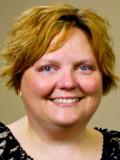
Jennifer LaLuzerne has been a Clinic Director at Step By Step Academy, Inc. since May 2011. Before that, she served as Program Manager and social worker, starting in 2008. At Step By Step, she is responsible for supervising Program Managers, their staff, and their caseloads, collaborating in the development and monitoring of treatment plans, behavior plans, and ongoing treatment integrity.
Jennifer has a Bachelor's Degree in social work from the University of Wisconsin - Madison, her Master's Degree in social work from The Ohio State University, and she is completing coursework towards her BCBA through the University of North Texas.

Peter Gerhardt, Ed.D., is the Executive Director of the EPIC School in Paramus, NJ. Dr. Gerhardt has more than 35 years’ experience utilizing the principles of Applied Behavior Analysis in support of adolescents and adults with autism spectrum disorders in educational, employment, residential and community-based settings. He is the author or co-author on a number of articles and chapters on the needs of adolescents and adults with ASD and has presented nationally and internationally on this topic.
Dr. Gerhardt serves as Chairman of the Scientific Council for the Organization for Autism Research and is on numerous professional advisory boards including the Cambridge Center for Behavioral Studies. He received his doctorate from Rutgers, The State University of New Jersey’s Graduate School of Education.

Melanie is a dually certified and licensed Speech-Language Pathologist (SLP) and Board Certified Behavior Analyst (BCBA). She is the Clinic Director of the Speech Therapy Group and The Verbal ABA Clinic at STG. She received her Bachelors of Science degree in Communication Disorders and Masters in Speech Language Pathology from the University of Massachusetts, Amherst, in 1999 and 2001, respectively. She also received her Masters of Education in Applied Behavior Analysis (ABA) and Autism from Endicott College, where she is currently working towards her PhD in ABA.
Her clinics are private practices focus on the areas of verbal behavior and swallowing/feeding disorders. Melanie’s main research interests include collaboration between speech pathology and behavior analysis, as well as verbal behavior, feeding disorders and organizational behavior management.

Dr. Syed is currently with Lehigh University’s Special Education Department as Professor of Practice and Clinical Director for Lehigh University Autism Services. Previously, Dr. Syed was an Assistant Professor of Special Education at Manhattanville College.
Dr. Syed has over 10 years experience in the field of applied behavior analysis, general and special education, autism, and developmental disabilities as a classroom teacher, Special Education Itinerant Teacher, ABA home based therapist, and behavioral supervisor for center and home based services. Dr. Syed has worked in early intervention, preschool, and school aged settings, as well as with adults.
In 2018, Dr. Syed was selected as a Top Tier International Partnership Discovery Fellow in the Inaugural Fellowship Class of the Global Autism Project, a nonprofit organization that provides training for local international practitioners in the utilization of evidence-based practices when working with people with intellectual and developmental disabilities.
Her research interests lie in verbal behavior, ethical practices in behavior analysis, and the implementation of behavior analysis to curriculum and teaching.

Ann Beirne, MA, BCBA is a Board Certified Behavior Analyst with over two decades of experience working with individuals with autism spectrum disorder.
She has provided direct services to children and families in home environments, schools, and residential programs. Her work with this population has spanned the lifespan, including toddlers, young children, adolescents and adults with developmental disabilities.
Ms. Beirne is co-author of the textbook Understanding Ethics in Behavior Analysis: Practical Applications available from Routledge Publishing in 2019.

Dr. Bailey received his PhD from the University of Kansas and is currently Professor Emeritus of Psychology at Florida State University where he was a member of the graduate faculty for 38-years and produced a record 63 PhDs. He is currently Director of the FSU Panama City Masters Program in Applied Behavior Analysis.
Dr. Bailey has published over 100 peer-reviewed research articles, is a past editor of the Journal of Applied Behavior Analysis, and is co-author of Research Methods in Applied Behavior Analysis, How Dogs Learn, Ethics for Behavior Analysts, 2nd Expanded Edition, How to Think Like a Behavior Analyst, and 25 Essential Skills and Strategies for Professional Behavior Analysts, all co-authored with Dr. Mary Burch.

Karen is the Founder and CEO of Special Learning. She started the company in 2010 after learning about the effectiveness of Applied Behavior Analysis (ABA) juxtaposed against the reality that over 95% of the world did not have access to ABA. As an entrepreneur with over 20 years of corporate experience, she started Special Learning to leverage existing and emerging technology to make quality ABA resources and services available to parents, educators and professionals around the world.
Karen’s entrepreneurial experience includes starting and growing a diversity retained executive search firm specializing in placing women and minority executives in leadership positions of Fortune 1,000 companies. Her investment banking background includes working with various venture capital and private equity companies to facilitate deal flow while representing CEOs of rapidly growing companies seeking to raise equity and debt capital for various middle market businesses and commercial real estate developers. Her corporate background includes various leadership and functional roles in Fortune 1,000 and middle market companies. Her additional entrepreneurial activities include owning and operating high end boutique
She graduated with a Masters of Management degree from Kellogg Graduate School of Management of Northwestern University. She is a Certified Public Accountant and a recipient of the Elijah Watts Sells Award from the American Institute of Certified Public Accounts (AICPA), an award granted to less than top 5% of all CPA exam candidates.