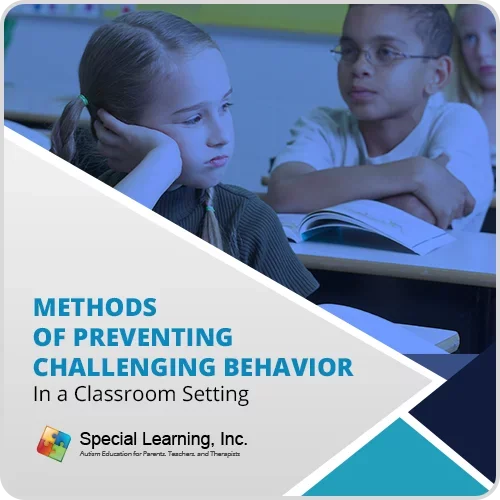
Methods of Preventing Challenging Behavior
You could be the first person to provide your opinion.
Amanda Fishley presents a classroom-focused webinar on mild-to-moderate challenging behavior. The recording covers matching tasks to learners, teaching expectations, making routines predictable, and recognizing desired classroom behavior, with examples of break cards, visual schedules and timers.
Catalogue presenter credits: Amanda Fishley.
NO CEUS
Fishley discusses work that is too easy or too difficult, requesting help or a break, and teaching positively phrased classroom expectations. The examples are presented for teachers and classroom teams.
Examples include first-then and picture schedules, individualized downtime bins, everyday choices, and visible timers for ending preferred activities. She also discusses descriptive praise and ways students can request attention. The session excludes severe or dangerous behavior; the native catalogue specifies no CEUs.
What does this recording cover?
- Matching classroom tasks to learners
- Teaching and rewarding positively phrased expectations
- Help and break requests, including break cards
- Visual schedules, downtime choices and transitions
- Descriptive praise and requests for attention
Recording context: The recording addresses mild-to-moderate classroom behavior and excludes severe or dangerous behavior. Its recording date is not supplied.
Course evaluation records
Special Learning's course evaluation snapshot contains 0 rating responses for this recording. No rating average is shown, and no anonymous learner comment is reproduced here. Source: course evaluation records, October 11, 2026.
Explore related learning
Meet the Presenter
Amanda Fishley, MA, BCBA, COBA is a Board Certified Behavior Analyst and Certified Ohio Behavior Analyst. She received her Master’s degree in Special Education/ABA from The Ohio State University. She has been working with in the field of ABA for over ten years.
She has experience working with children, adolescents and adults in school, home and mental health settings. These experiences have allowed her to work closely with parents, teachers, paraprofessionals, as well as mentoring and supervising behavior analysts. She is the Associate Director of Clinical Solutions for Special Learning, creating and presenting educational materials and promoting Special Learning’s mission to positively impact the special needs community.
No reviews yet!
For adding a review for this product you need to purchase current product and be authorized.